Bloom Lettering: A Practical Guide for Designers and Crafters
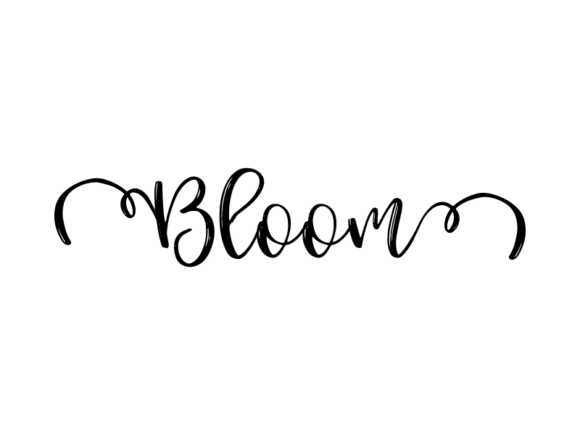
Bloom Lettering refers to a style of hand-drawn, monochrome vector lettering—often floral or organic in inspiration—that is delivered as scalable SVG files. Unlike raster images or pre-rendered fonts, Bloom Lettering is built with clean Bézier paths, making it fully editable in vector software such as Adobe Illustrator, Affinity Designer, or Inkscape. Its defining traits include intentional imperfections, subtle line variation, and a cohesive, hand-crafted aesthetic—all preserved across any scale or color adjustment.
People often explore Bloom Lettering when seeking design assets that bridge authenticity and flexibility. It’s not a font you install and type with; rather, it’s a set of individual letterforms or complete words, crafted manually and converted into vectors. This distinction matters: users choose Bloom Lettering not for speed of typesetting, but for expressive control over shape, spacing, and visual tone.
Why Consider Bloom Lettering?
Designers and makers turn to Bloom Lettering for several practical reasons:
- Adaptability across mediums: Because it’s vector-based and monochrome, Bloom Lettering scales cleanly from tiny embroidery motifs on fabric tags to large-format posters or wall decals—without pixelation or quality loss.
- Customization without compromise: Each letter or word can be recolored, reshaped, layered, or combined with other graphics without affecting integrity. This supports consistent branding across print, web, and physical products like apparel or home décor.
- Workflow compatibility: SVG files integrate smoothly into common design, cutting, and production pipelines—whether used with Cricut or Silhouette machines, screen printing separations, or digital layout tools.
- Aesthetic cohesion: The hand-drawn quality offers warmth and approachability, especially valuable in education, wellness, lifestyle, or artisanal branding contexts where polish alone may feel impersonal.
What to Expect—and What Requires Adjustment
Using Bloom Lettering effectively depends on understanding its scope and limitations. First, it requires basic vector editing literacy. Users unfamiliar with path selection, anchor point manipulation, or layer organization in Illustrator may face a learning curve—not because the files are complex, but because their value is unlocked through deliberate editing, not drag-and-drop use.
Second, Bloom Lettering is not typographically systematic. It does not include full character sets, diacritics, or OpenType features. If your project demands multilingual support, dynamic text flow (e.g., long paragraphs), or automated kerning, Bloom Lettering serves best as a highlight element—not body copy.
Third, while monochrome simplifies reproduction (especially for screen printing, engraving, or vinyl cutting), it also means color decisions rest entirely with the user. That’s an advantage for brand alignment—but it also means no built-in palettes or contrast guidance. Designers must assess legibility and context separately, particularly for small-scale applications like clothing tags or social media avatars.
When Bloom Lettering Is a Strong Fit
Bloom Lettering excels in projects where visual intention outweighs typographic utility. It’s well-suited for:
- Product decoration: Embroidered tote bags, heat-pressed mugs, or printed pillow covers benefit from its tactile, human-scaled rhythm—especially when paired with botanical or minimalist themes.
- Educational and craft settings: Teachers use Bloom Lettering in classroom activities for letterform exploration, cut-paper art, or stencil-making—its clear outlines and moderate detail support both digital and analog workflows.
- Branded collateral with limited text: Business cards, event invitations, book covers, or packaging where one or two key words carry conceptual weight (e.g., “Gather,” “Rooted,” “Bloom”) gain distinction through custom lettering rather than standard fonts.
- Digital assets requiring consistency: Social media banners, ebook chapter headers, or website hero text benefit from unique, ownable typography—provided the usage remains selective and context-aware.
When Alternatives May Be More Appropriate
Not every design challenge calls for Bloom Lettering. Consider alternatives if:
- You need extensive text handling—such as multi-page reports, newsletters, or UI interfaces. In those cases, a carefully chosen variable font with robust language support and responsive behavior will deliver better efficiency and accessibility.
- Your workflow prioritizes speed over customization. If you’re producing dozens of rotating social posts weekly, editable vector lettering may slow output compared to a high-quality script font with ligatures and stylistic sets.
- You require precise typographic control—like optical sizing, automatic fractions, or contextual alternates. Bloom Lettering offers none of these; it’s static by nature.
- Your audience includes users relying on screen readers or low-vision accommodations. While SVGs can be made accessible, Bloom Lettering used as decorative text should never replace semantic HTML headings or properly tagged content.
Making an Informed Choice
Before selecting Bloom Lettering, ask three questions:
- What role does this text play? Is it functional (e.g., instructions, contact info) or expressive (e.g., a slogan, title, or motif)? Bloom Lettering belongs in the latter category.
- Who edits or maintains it? Ensure the person applying it has access to vector software and time to adjust spacing, weight, or alignment—not just recoloring.
- Where and how will it appear? Test at intended sizes and backgrounds. A flourish that reads beautifully on a poster may vanish on a 2-inch fabric tag. Simplicity and contrast matter more than ornamentation in constrained spaces.
Also consider sourcing. Reputable Bloom Lettering collections provide clean, outlined paths (not live text), minimal overlapping anchors, and organized layers—traits that affect editability and file stability. Free or low-cost options sometimes sacrifice structure for aesthetics, leading to unexpected rendering issues in cutting software or browsers.
Finally, remember that Bloom Lettering is one tool among many—not a replacement for thoughtful typography strategy. Its strength lies in specificity: a single phrase, elevated through craft and intention. When aligned with realistic expectations and matched to appropriate use cases, it supports clarity, cohesion, and quiet distinction—without demanding attention for its own sake.