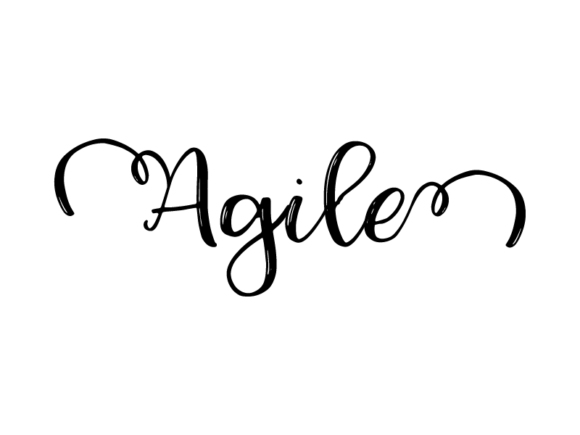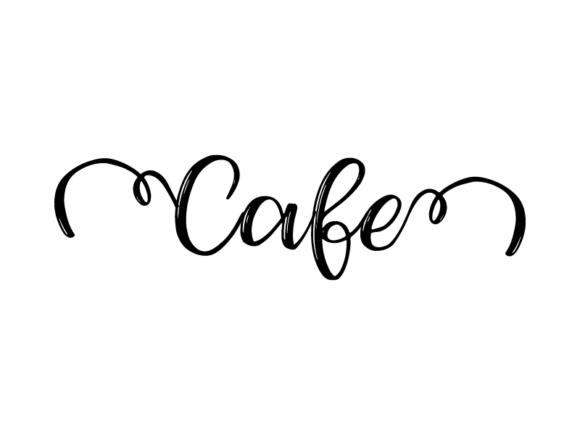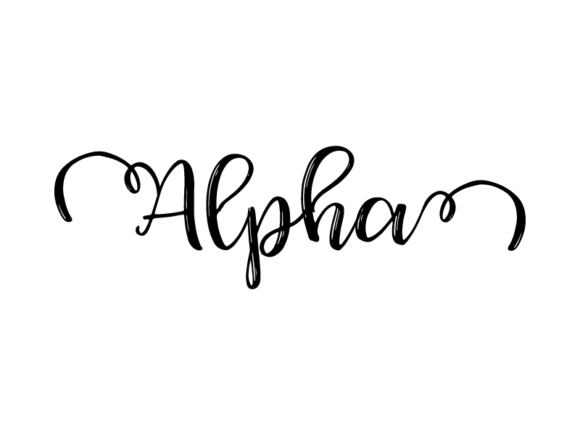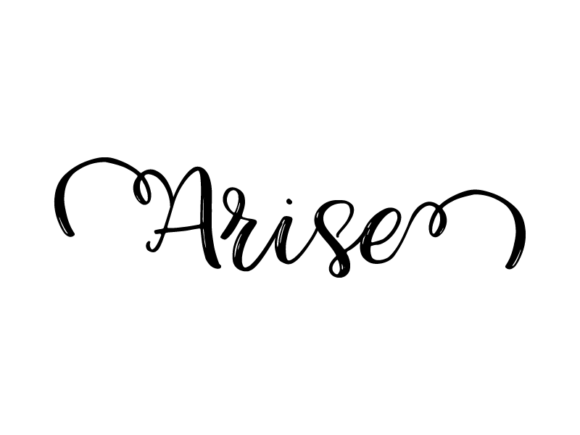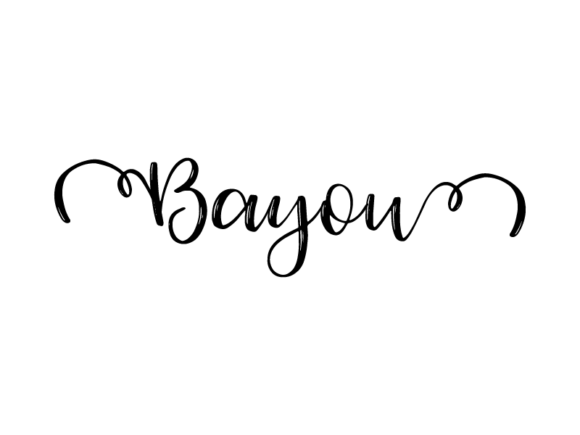
Bayou Lettering: Hand-Drawn Monochrome Magic
If you’ve ever held a hand-lettered sign at a farmers’ market, admired the quiet confidence of a small-batch coffee bag, or paused mid-scroll on an Instagram post with effortlessly warm typography—you’ve felt the pull of authentic, human-made lettering. Bayou Lettering isn’t just another vector font. It’s a collection of monochrome, hand-drawn graphic letterforms—crafted with intention, inked with personality, and built for real-world making.
A Style That Breathes, Not Just Displays
Bayou Lettering sits comfortably between script and modern display type—fluid but grounded, organic but precise. Each character carries subtle variation in stroke weight, gentle tapering, and soft terminals that echo natural pen movement. There are no rigid grids or mechanical uniformity here. Instead, you’ll find thoughtful imperfections: a slight swell in the curve of a lowercase ‘s’, a tapered crossbar on the ‘t’, a confident exit stroke on the ‘y’. These aren’t flaws—they’re cues that invite the eye to linger, to feel texture even in flat black-and-white.
Its monochrome nature means it prints cleanly at any size—from 4pt embroidery tags to 8-foot festival banners—without color shifts or registration issues. And because it’s delivered as scalable vector (SVG and AI), resizing doesn’t degrade quality. You’re not locked into one size or format. Need it 30% smaller for a business card? Done. Want to stretch it across a tote bag? No pixelation, no fuss.
Where Bayou Lettering Earns Its Keep
This isn’t a font for body copy. It’s a premium display font—designed to lead, not follow. Think of it as your visual anchor: the first thing people see, the last thing they remember.
- Branding & packaging: Small-batch soap labels, ceramic studio logos, indie book covers—Bayou Lettering adds warmth without sacrificing clarity. Its handmade honesty builds trust faster than sterile sans serifs in artisanal markets.
- Print & promotional materials: Posters for local music venues, workshop flyers, wedding invitations—it holds attention in crowded physical spaces where digital noise doesn’t compete.
- Digital touchpoints: Social media quote graphics, email headers, landing page hero text. Because it’s vector-based, it renders crisply on retina screens and exports cleanly to PNG or PDF for web use.
- Craft & classroom applications: Teachers use it for bulletin board lettering; makers cut it for iron-on transfers or vinyl decals; hobbyists layer it into mixed-media journals. Its clean outlines make it ideal for cutting machines (Cricut, Silhouette) and embroidery digitizing.
Readability Isn’t Optional—It’s Designed In
Hand-drawn doesn’t mean hard to read. Bayou Lettering balances expressive gesture with functional legibility. Uppercase letters are open and generous; lowercase forms avoid tight counters or over-connected joins that blur at small sizes. The spacing is intentionally generous—not tight kerning, but considered rhythm—so words breathe instead of crowd.
That said, context matters. Use it at 24pt or larger for headlines. Avoid setting full paragraphs in it—even beautifully drawn letters fatigue the eye over long stretches. For editorial design or books, pair it with a neutral sans serif (like Inter or Montserrat) or a relaxed serif (such as Lora or Merriweather) for contrast and balance. The combination creates hierarchy: Bayou Lettering says “this matters,” while the supporting type says “here’s why.”
Practical Tips Before You Drop It Into Your Next Project
Start by asking: Is this the voice my audience expects—or needs—to hear? A law firm’s annual report? Probably not. A slow-fashion brand’s seasonal lookbook? Absolutely. Bayou Lettering signals approachability, care, and craft—not corporate speed or algorithmic polish.
Test it early in your workflow:
- Check contrast: On dark backgrounds, reverse it out cleanly—no halos, no thin strokes disappearing. Its bold baseline holds up well, but avoid ultra-thin decorative elements if printing on textured paper.
- Review included styles: Does your version include alternate characters, ligatures, or swashes? Some Bayou Lettering packages offer extended Latin support or stylistic sets—use them to add nuance without switching fonts.
- Verify licensing: This is a commercial font. Confirm your license covers your intended use—especially for merchandise (t-shirts, mugs), SaaS interfaces, or client work where assets may be reused across campaigns. Most reputable sellers provide clear terms; when in doubt, ask.
- Try it in grayscale first: Since it’s monochrome, skip RGB experiments. Focus on how it behaves in CMYK for print, or sRGB for screen—then recolor deliberately, not decoratively.
More Than a Font—A Design Asset With Range
What makes Bayou Lettering stand out isn’t just how it looks—it’s how it works across disciplines. A textile designer scales it for repeat patterns on linen napkins. A UX writer uses it sparingly in onboarding illustrations to soften technical interfaces. A publisher drops it into a poetry chapbook cover to echo the author’s lyrical tone. A café owner prints it on kraft paper menu boards—and customers comment on how “it feels like it was made just for us.”
That resonance comes from consistency of intent. Every curve, every terminal, every space was considered not for trend, but for utility. It doesn’t shout. It invites. It doesn’t replace strategy—it supports it, quietly and effectively.
So whether you’re sketching ideas on tracing paper or building a Shopify store from scratch, Bayou Lettering gives you room to express without overcomplicating. It’s ready for Illustrator, compatible with Figma via SVG import, friendly to Procreate brushes, and forgiving enough for beginners—but refined enough that seasoned designers reach for it when authenticity can’t be faked.
No plugins. No learning curve. Just honest, editable, monochrome lettering—drawn by hand, built for doing.